
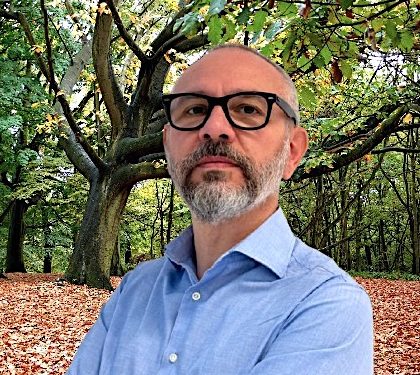
The common thread running through my professional and research career has always been my interest in the way people construct, share and transform meaning. I hold a PhD and now specialise in semiotics, a discipline that has taught me to observe reality by paying particular attention to the languages, signs and processes through which individuals, groups and organisations interpret the world and shape their relationships. A significant part of my research focuses on the study of symbols, their layers of meaning and the ways in which they traverse eras, cultures and traditions, preserving and transforming meanings. This interest has merged with my professional work.
I work as a consultant in the fields of strategic communication, institutional relations and public relations, supporting organisations and individuals in defining their positioning, building relationships and developing the ability to make their identities, objectives and visions understandable and shareable. Alongside this, I teach, write and work as a journalist.
It is through these experiences that I have come to IMO. In the methodology of horizontal leadership, I recognized a perspective that is particularly close to my own journey: the idea that the development of an organisation cannot be separated from the development of the people within it, and that any authentic transformation requires awareness, the ability to interpret the context, and a continuous search for meaning. For me, this search also encompasses the spiritual dimension of the individual: not as something separate from concrete experience, but as that which can provide it with direction, depth and unity. Joining IMO represents, for me, an opportunity to bring semiotics and the study of symbolic processes into dialogue with a methodology oriented towards human and organisational development. It means bringing to organisational work a focus on communication not merely as a tool, but as a space in which identities, relationships and opportunities for change are constructed.
With IMO, I wish to explore precisely this dimension: to understand how processes of meaning-making can contribute to the growth of individual and collective awareness, and how symbols, languages and narratives can become living elements in the transformation journeys of people and organisations. I am interested in symbols precisely because they are never limited to a single interpretation. It carries with it memories, archetypes and layers of meaning; it spans cultures and traditions, creates connections and opens up different levels of interpretation. Studying symbols therefore means asking not only what they represent, but also what connections they establish and how they shape – sometimes silently – the way we understand reality and act within it.