
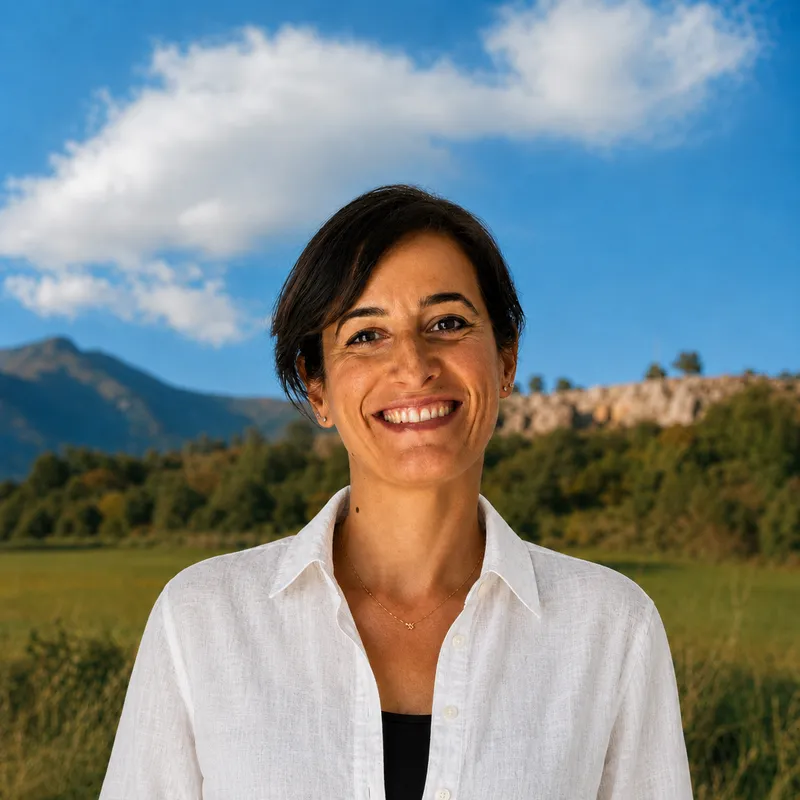
Ever since my youth, I have devoted considerable effort to understanding the processes involving people organised into movements and voluntary activities, so that, whilst undertaking my PhD in Neuroscience at the University of Parma, I developed a growing interest in organised life. My curiosity and my exploration – both in life and in science – led me to experience various collaborative contexts (family businesses, religious congregations, universities and research laboratories in Italy and abroad, non-profit associations, movements and voluntary groups) and to reflect on the conditions that enable people and organised systems to generate value. Finally, I chose to devote myself to training activities, particularly with adults, which I consider an effective means of reaching as many people as possible directly within their own life contexts, fostering their development, promoting prevention and wellbeing, and thereby contributing to social cohesion.
The field of training activity allows me to put into practice the tools of my profession as a psychologist and the knowledge of cognitive, learning and emotional processes gained through my research experience, in order to foster self-awareness and responsibility for one’s own choices in people, and to contribute to the development of each individual’s potential and capacity for growth.
I carry out my work in the design, delivery and impact assessment of programmes for learning and relational development, primarily within the non-profit sector, as a ‘pillar of social cohesion’, then within the business sector understood, as a collective and civic actor oriented towards the common good, and within schools, supporting educational and transformative processes that integrate scientific research, experiential and creative practices, autobiographical practices, and collective and participatory learning.
At IMO, I have found a deep alignment of values and a shared vision of organisations as dynamic systems in which the development of people and that of organisational processes proceed in an interconnected manner. From this perspective, I consider it essential to empower people as responsible agents of change, operating within a recursive dynamic with the context in which they live and in reciprocity with others, so that change is not merely individual but systemic, involving the entire organisation as a learning community.